MomentsInSG
· education · 4 min read
School Hours Across Singapore, China and Japan
A comparison of school hours in Singapore, China, and Japan, and what those differences reveal about education priorities.
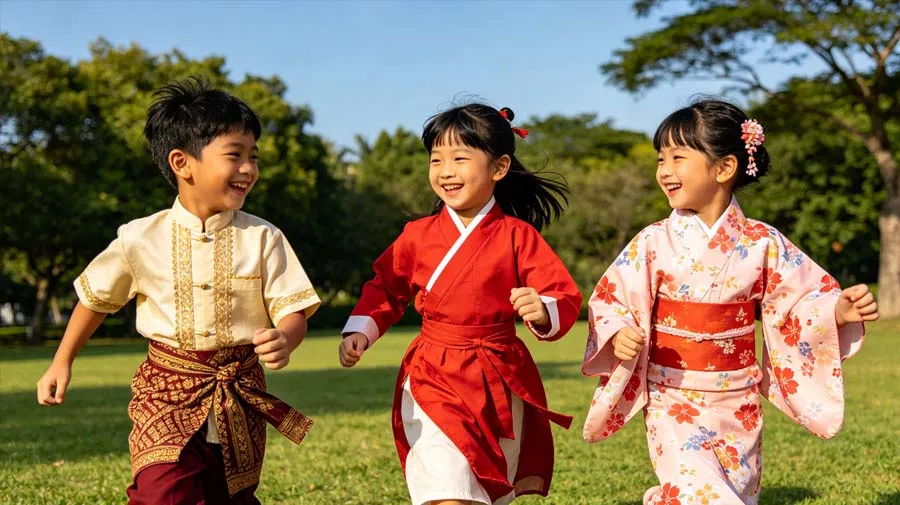
The other day, while having my morning kopi and watching students make their way to school, a question came to mind:
Why do school days look so different depending on where you live?
In Singapore, many primary school students are already heading home around lunchtime. In China, students may stay in school until late afternoon or even evening. In Japan, formal lessons often end relatively early, but many students remain on campus for club activities and school responsibilities.
The more I looked into it, the more I realised that school hours are not just about timetables. They reflect different ideas about education, competition, discipline, and even childhood itself. 📚
A Quick Comparison of School Hours
While schedules vary from school to school, the general pattern looks something like this:
| Country | Typical Start Time | Typical End Time | Characteristics |
|---|---|---|---|
| Singapore | 7:30am | 1:00pm–3:00pm | Shorter official school day, many students attend tuition or CCA afterwards |
| China | 7:00am–8:00am | 4:00pm–6:00pm | Longer academic hours, strong examination focus |
| Japan | 8:00am | 3:00pm–4:00pm | Moderate classroom hours, extensive club activities |
Looking purely at the timetable, Singapore appears to have the shortest school day, while China generally has the longest.
But the numbers only tell part of the story.
Singapore: Efficiency Over Long Hours 🇸🇬
Singapore’s education system is often described using one word: efficient.
Many primary school students finish classes before lunch or shortly afterwards. Secondary school students usually stay longer, but the official school day remains relatively compact compared to many parts of Asia.
The philosophy seems straightforward: focus on productivity rather than simply increasing classroom hours.
Advantages
✅ More flexibility for students after school
✅ Less time spent sitting in classrooms
✅ Greater opportunity for self-directed learning
✅ More time for family activities and hobbies
Challenges
However, many Singaporean families know that school is only one part of a student’s day.
Tuition centres, enrichment classes, music lessons, coding courses, and sports training often fill the remaining hours.
In some cases, students may spend almost as much time on education after school as they do during school itself.
This raises an interesting question:
Are students truly enjoying shorter school days, or is learning simply being shifted elsewhere?
China: Long Hours and Academic Intensity 🇨🇳
China is well known for its demanding academic environment.
In many cities, students start early and finish late. Some schools also include evening self-study sessions, especially for older students preparing for major examinations.
The system places significant emphasis on academic achievement and examination performance.
Advantages
✅ Strong academic foundation
✅ High levels of discipline and consistency
✅ Extensive classroom exposure to key subjects
✅ Students often develop strong study habits
Challenges
Longer school days can create pressure.
Students may experience higher levels of stress and reduced personal time. Balancing academic achievement with mental well-being becomes increasingly important.
While long hours can improve performance, there is always a point where additional study produces diminishing returns.
More time does not automatically mean better learning.
Japan: Education Beyond the Classroom 🇯🇵
Japan offers a rather different model.
Formal lessons generally end earlier than many people expect. However, the school day often continues through club activities, sports teams, cultural societies, and student-led responsibilities.
Many students participate in activities ranging from baseball and football to orchestra, tea ceremony, and robotics.
Advantages
✅ Strong focus on teamwork and responsibility
✅ Development of social and leadership skills
✅ Students learn through practical experiences
✅ School becomes a community rather than merely an academic institution
Challenges
Club activities can be time-consuming.
Some students spend several hours each day on extracurricular commitments, leaving limited time for rest.
In recent years, there has been growing discussion in Japan about balancing participation and student well-being.
Which System Is Better?
The honest answer is that each system reflects different priorities.
Singapore prioritises efficiency.
China prioritises academic rigour.
Japan prioritises holistic development and community participation.
Each approach produces strengths that are visible in society.
Singapore develops adaptable and highly skilled learners.
China produces students with strong academic resilience.
Japan nurtures responsibility, teamwork, and social awareness.
None of these systems is perfect, and none can simply be copied elsewhere.
Educational success depends not only on school hours but also on teaching quality, family support, learning culture, and student motivation.
Maybe the Real Question Isn’t About Time ⏰
When people compare education systems, they often focus on how many hours students spend in school.
But perhaps the more important question is:
What are those hours being used for?
A six-hour school day filled with engaging lessons, meaningful activities, and opportunities for growth may be more valuable than a ten-hour day spent passively absorbing information.
The goal of education should not be to maximise the number of hours students spend in school.
It should be to make those hours count.
And that is something every education system—whether in Singapore, China, or Japan—is still trying to figure out.