MomentsInSG
· World · 5 min read
The Last Wallet in My Drawer
“An old wallet in a drawer reminds me how quickly daily life changes. Once essential, it has been replaced by smartphones and digital payments in Singapore. Its disappearance reflects how technology turns familiar objects into memories and reshapes the way we live and work.”
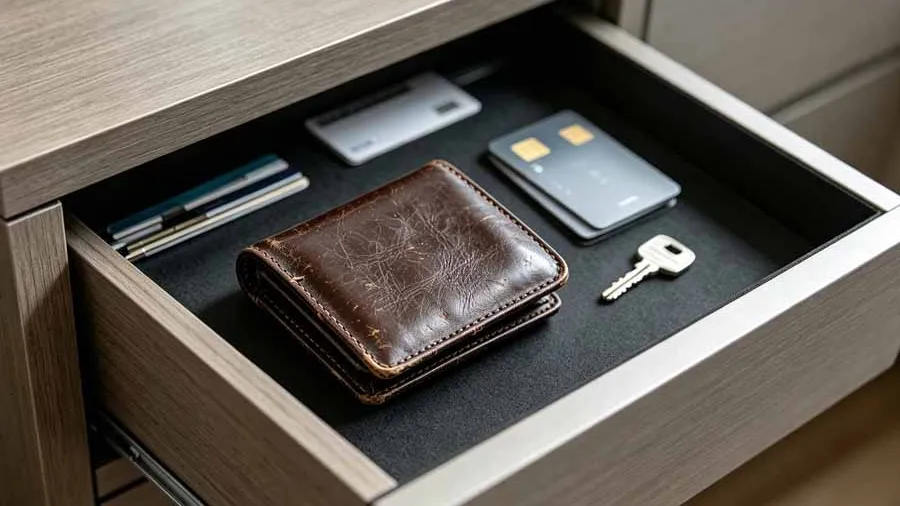
A few days ago, while clearing out my room, I opened the bottom drawer of my desk and found an old wallet hidden among some forgotten documents, charging cables and various odds and ends. For a moment, I just stared at it.
It wasn’t a luxury brand. It wasn’t a souvenir from a memorable trip. It wasn’t a gift from a special occasion. In fact, there was nothing particularly remarkable about it at all.
Yet I had kept it for years.
As I held it in my hand, I realised why. I wasn’t keeping it because of its value. I was keeping it because it might be the last wallet I would ever seriously use in my life.
That wallet is not really a collectible. What it represents is an era that is quietly fading away.
Not too long ago, a wallet was one of the most important things people carried every day. Before leaving home, many of us would instinctively check three things: our keys, our phone and our wallet. Inside that small leather fold were our identity cards, bank cards, transport cards, cash, coins and sometimes even business cards or family photos.
A wallet was not just a practical item. It was part of everyday life.
Back then, wallet shops and counters could be found almost everywhere in Singapore. Department stores had dedicated leather goods sections filled with wallets of every size and style. Neighbourhood malls often had small kiosks selling wallets alongside belts and bags. Buying a new wallet was as ordinary as buying a phone case today.
Nobody really imagined that one day wallets would become almost unnecessary.
The change did not happen overnight. It arrived gradually, one small convenience at a time. First, people started carrying less cash. Then bank cards became linked to mobile apps. Transport cards moved into digital wallets. Mobile payment systems became faster and more widely accepted.
Eventually, almost everything that used to live inside a wallet found a new home inside a smartphone.
Today, I can leave home with nothing more than my phone and still get through the entire day. I can buy coffee, pay for groceries, take public transport and transfer money without ever touching a physical banknote. The technology has become so seamless that I rarely even think about it anymore.
In fact, when I stopped to think about it recently, I realised that I had not handled paper money in a very long time. Not days or weeks, but possibly months. Cash still exists, of course, but it has quietly moved to the edges of daily life. Sometimes when I receive a banknote as change, it almost feels unfamiliar, as if I am holding something from another era.
What fascinates me most is how little attention this transition received.
There was no official farewell to wallets. No public discussion about their decline. They simply slipped out of our routines and disappeared into the background.
The same thing happened to many other objects that once felt indispensable. Public phone booths vanished. MP3 players vanished. DVD rental stores vanished. Printed street maps vanished. None of them disappeared in a dramatic moment. They slowly became less useful until one day we realised we had not seen them for years.
The wallet seems to be following the same path.
As I looked at that old wallet, another thought crossed my mind.
I am a software developer. In many ways, people like me have helped create the technologies that made wallets less necessary. Digital payments, online services, mobile applications and cloud systems did not appear by themselves. They were designed, built and maintained by programmers.
We spend our careers creating tools that make life more efficient, more convenient and more connected.
But what happens when the tools we build become capable of replacing us as well?
It is difficult to ignore that question in the age of artificial intelligence.
Every year, AI systems become more capable of generating code, solving technical problems and automating tasks that once required significant human effort. Work that used to take hours can sometimes be completed in minutes. Tasks that once demanded specialised expertise are becoming increasingly accessible.
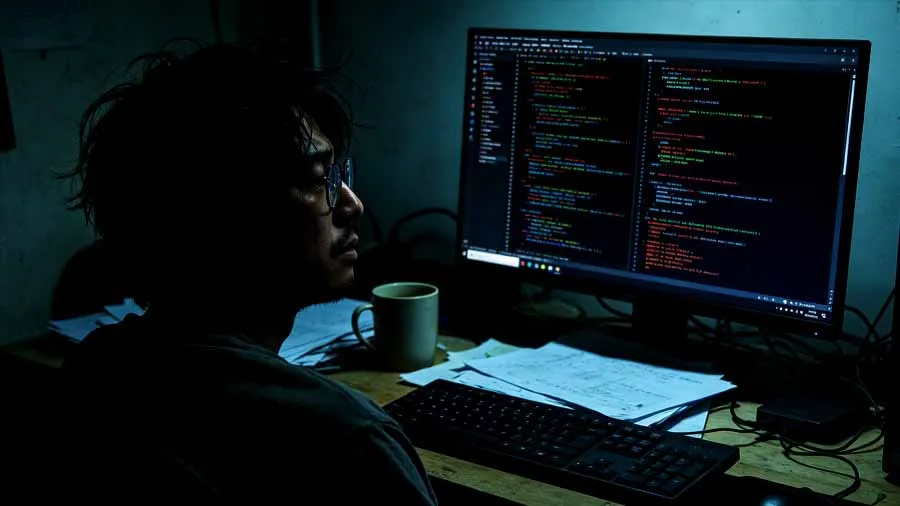
Sometimes I wonder whether future generations will look at programmers the same way we look at wallets today.
Perhaps a young person decades from now will come across an old software project and ask, “Did people really write all of this code themselves?”
And someone else will reply, “Yes. Back then, there was a profession called software developer.”
It sounds unlikely, maybe even amusing. But if someone had told us twenty years ago that many people would stop carrying wallets altogether, we might have found that equally difficult to believe.
Of course, technological progress does not always mean complete extinction. Wallets have not entirely disappeared. Some people still carry them. Some prefer using cash. Others keep wallets as personal accessories or collectibles.
Perhaps programmers will follow a similar path.
What disappears may not be the profession itself, but the way the profession exists today. Instead of spending most of our time writing code, future programmers may focus on designing systems, defining objectives, supervising intelligent tools and solving problems at a higher level of abstraction.
As I placed the wallet back into the drawer, it felt less like an everyday object and more like a small historical artifact.
It reminded me that the world is constantly changing, often so gradually that we barely notice it happening. Things that once seemed essential can become optional. Tools that once defined an era can quietly become memories.
Perhaps one day people will look back at our present world with the same sense of curiosity that we now feel when remembering the age of cash and wallets.
Until then, that old wallet will remain in my drawer.
Not because I expect to use it again, but because it serves as a reminder that nothing stays unchanged forever. Whether it is a wallet, a technology or even a profession, every tool has its time.
What endures is not the tool itself, but humanity’s endless ability to invent something new and move forward once again.